
Interior

Lighting Cohesive Environments Layers of Lighting Design
Understanding the Eight Layers of Lighting Design in Luxury Architecture 750 750 Adaptive Design Group, Inc.

Understanding the Eight Layers of Lighting Design in Luxury Architecture

Understanding the Eight Layers of Lighting Design in Luxury Architecture

Adaptive Design Group and the Eight Layers of Light Philosophy

A single light source can illuminate a room. Layered lighting, however, will transform it.

At Adaptive Design Group, our philosophy centers around the Adaptive Method™, a trademarked approach built upon eight intentional layers of illumination. Each layer serves a distinct purpose, working together to shape the way a space feels, functions, and evolves throughout the day.

The Layers of Lighting Design include:

Architecture
Decorative
Art
Path
Task
Interior Design
View
Exterior

Individually, each layer contributes something meaningful. Together, they create an environment that feels balanced, dynamic, and complete. Without relying too heavily on a few fixtures to light everything, each element can be carefully crafted with its own appropriate light while still allowing for decorative and artful lighting.

Architectural lighting reveals the structure of a space, highlighting ceiling lines, beams, and walls. Decorative lighting introduces sculptural elements that add rhythm and character. Task lighting ensures daily activities—from cooking to reading—are supported with clarity and comfort.

Meanwhile, art lighting celebrates collections and visual focal points, while path lighting guides safe movement throughout the home. Interior design lighting enhances texture and materiality, while view lighting frames outdoor scenery after sunset.

Finally, exterior lighting extends the architectural narrative beyond the walls of the home, establishing a warm and inviting presence from the moment of arrival.

This layered approach ensures that no single fixture carries the entire burden of illumination. Instead, light is distributed thoughtfully throughout the environment, creating depth and flexibility.

In practice, this means a space can evolve naturally throughout the day. Bright and functional during active hours, warm and intimate in the evening, and dramatic when entertaining guests.

When lighting is layered intentionally, the result is not simply brightness—it is atmosphere.

If you want to experience how layered lighting can transform your home, begin the conversation with Adaptive Design Group today.

#AdaptiveDesignGroup

Advanced Lighting Systems Collaboration with dedicated professionals lighting designer collaboration
Why Collaboration Between Architects, Builders, and Lighting Designers Matters 750 750 Adaptive Design Group, Inc.

Why Collaboration Between Architects, Builders, and Lighting Designers Matters

Why Collaboration Between Architects, Builders, and Lighting Designers Matters

We are experts in Lighting Designer Collaboration. Exceptional homes are never created in isolation.

Behind every remarkable residence is a team of specialists working in harmony—architects, interior designers, engineers, builders, and technology integrators. Lighting design sits at the intersection of these disciplines, translating architectural intent into an experience that unfolds through light.

At Adaptive Design Group, lighting designer collaboration is fundamental to our process. When lighting designers engage early with the broader design team, every layer of the home can be coordinated with clarity and purpose.

Architects define form and structure.
Interior designers establish tone, texture, and materiality.
Integrators ensure technology functions seamlessly.
Lighting design connects these elements together.

This collaborative approach aligns closely with the Adaptive Method™, where illumination is built through eight integrated layers. Each layer interacts with architectural details, furnishings, pathways, and views, requiring input from multiple disciplines to achieve the desired balance.

When teamwork functions effectively, lighting becomes an extension of the architecture itself. Fixtures disappear into ceilings, walls, and millwork. Decorative elements complement structural features. Outdoor lighting aligns with landscape design and circulation patterns.

The result is a home where every component feels intentional and cohesive. This means a comfortable place where you can relax, entertain, and above all – make memories.

Strong collaboration also prevents costly revisions later in construction. When lighting is considered early alongside electrical engineering and interior design plans, the system can be integrated cleanly and efficiently.

Perhaps most importantly, teamwork ensures that the homeowner receives the best ideas from every expert involved in the project.

Architecture becomes stronger.
Interiors feel more cohesive.
Technology operates intuitively.

And lighting quietly supports them all.

If you’re assembling a team for a new custom residence, invite Adaptive Design Group into the conversation early and experience how collaborative lighting design elevates every discipline involved.

#AdaptiveDesignGroup

The Best in the Industry lighting design consultation
Why Professional Lighting Design Consultations Are Essential for Luxury Homes 589 589 Adaptive Design Group, Inc.

Why Professional Lighting Design Consultations Are Essential for Luxury Homes

Why Professional Lighting Design Consultations Are Essential for Luxury Homes

Every exceptional lighting design begins with a conversation.

At Adaptive Design Group, consultations are not simply introductory meetings—they are a critical phase in the design process where vision, architecture, and lifestyle begin to align. Before a single fixture is specified or a lighting plan is drawn, we take the time to understand how a home will be experienced.

How do the owners live within the space?
Where do they gather, entertain, relax, and retreat?

These insights shape the foundation of every successful, bespoke lighting design.

During a professional lighting consultation, architectural drawings, material selections, ceiling heights, and interior layouts are reviewed carefully. Lighting must respond to each of these factors. A vaulted ceiling requires a different strategy than a coffered one. Textured stone interacts with light differently than smooth plaster. The consultation allows these nuances to be addressed early—when thoughtful solutions are still easy to integrate.

This early collaboration aligns directly with the philosophy behind the Adaptive Method™, where lighting is developed through eight intentional layers: Architecture, Decorative, Art, Path, Task, Interior Design, View, and Exterior. Each layer serves a purpose, and each must be considered within the broader context of the home.

When lighting is introduced late in the process, opportunities are often missed. When it begins during the architectural phase, however, lighting becomes part of the structure itself—guiding circulation, revealing materials, and shaping atmosphere.

Consultations also allow the entire technical team to collaborate effectively. Architects, interior designers, and integrators all contribute valuable perspectives, ensuring the lighting system supports both the aesthetic and technical goals of the project.

Ultimately, the consultation phase transforms lighting from a product decision into a design discipline.

If you are beginning a new custom home or renovation, schedule a consultation with Adaptive Design Group and start the lighting conversation early.

#AdaptiveDesignGroup

MerlinLight® recessed framing projectors Merlin Lighting Systems
Merlin Lighting Systems: Experts in Luxury Art Lighting 750 750 Adaptive Design Group, Inc.

Merlin Lighting Systems: Experts in Luxury Art Lighting

Merlin Lighting Systems: Experts in Luxury Art Lighting

In homes where art plays a central role, lighting must do more than illuminate—it must honor the work itself.

At Adaptive Design Group, we frequently specify our Patented Merlin Light® Fine Art Optical Framing Projectors, a museum-grade solution designed to frame artwork with remarkable precision. Unlike traditional accent lighting, Merlin Light uses optical framing technology to shape light exactly to the boundaries of a painting, photograph, or sculpture. The result is controlled illumination with no spill, no glare, and no distraction.

This level of precision is essential when lighting valuable or delicate works of art. True color rendering ensures that pigments appear exactly as the artist intended, while carefully engineered beam control allows light to reveal texture, depth, and brushwork without overwhelming the piece. Using the Merlin Lighting Systems, the fixture itself quietly disappears into the architecture, allowing the artwork to remain the focus.

Within the Adaptive Method™, art lighting represents the Art Layer, one of the eight intentional layers that define our approach to residential illumination. When integrated with architectural, decorative, and ambient lighting, this layer ensures that a home’s collection becomes part of the overall design narrative.

In many luxury homes, art collections evolve over time. A thoughtfully designed lighting system allows flexibility, ensuring new acquisitions can be illuminated with the same level of precision as existing pieces. Through careful specification and placement, Merlin Light fixtures support this adaptability while maintaining a clean architectural aesthetic.

Ultimately, great art lighting is invisible. When done properly, visitors notice the artwork—not the fixture illuminating it.

That is the essence of refined lighting design: technology serving artistry, quietly and precisely.

If your home features artwork worth celebrating, reach out to Adaptive Design Group to explore how museum-quality lighting can elevate and protect your collection.

#AdaptiveDesignGroup

Collaborating with Industry Leaders
Collaborating with Industry Leaders 750 750 Adaptive Design Group, Inc.

Collaborating with Industry Leaders

Collaborating with Industry Leaders

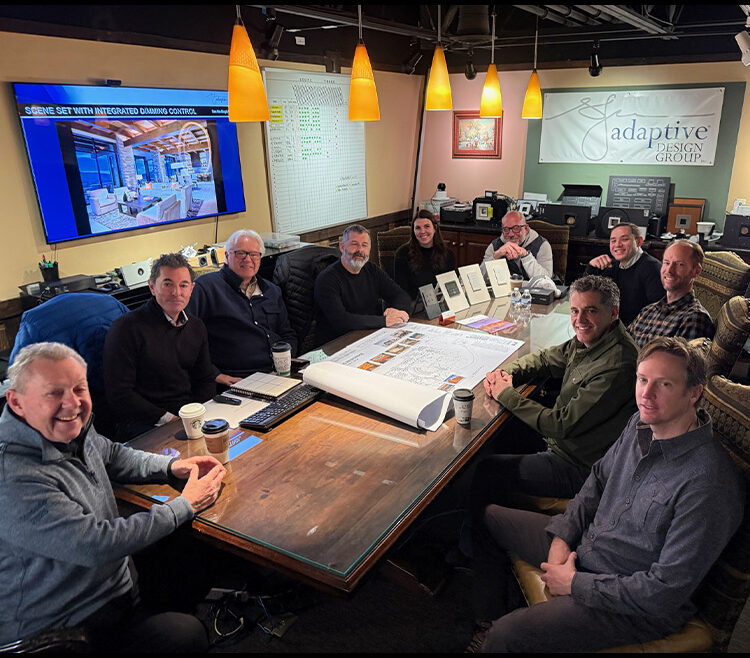
Meeting of the minds at Adaptive Design Group’s Park City, Utah headquarters. Collaboration is where innovation begins — bringing together industry leaders to illuminate the path of design and engineering excellence in 2026 and beyond.

Partnerships like these continue to push the boundaries of what’s possible in custom home design. Precision, artistry, and technical expertise remain at the heart of every project we touch.

Grateful for the opportunity to collaborate with industry innovators:
David Weinstein of Lutron & Lutron Electronics
Justin Rounsefell of Sratusgroup.design
CET & Associates Unifiedrep.com
Sean O’Connor of seanoconnorlighting.com

True innovation emerges when expertise converges. At Adaptive Design Group, we recognize that exceptional residential design requires more than vision — it demands coordination across disciplines. Architects, interior designers, engineers, and lighting specialists bring complementary insights that elevate a project from remarkable to transformative. These partnerships foster dialogue, experimentation, and technical rigor, ensuring every element of the home, from architectural lighting to integrated controls, functions in concert and fulfills the design intent.

Collaboration is not merely operational; it is strategic and creative. By engaging with leaders across electronics, lighting design, and systems integration, ADG ensures that every solution is cutting-edge, fully integrated, and tailored to the unique demands of each residence. Insights from Lutron’s control systems, Sratusgroup’s design innovations, and other industry experts allow our team to anticipate challenges, refine workflows, and push the boundaries of what’s possible within high-end residential environments.

This approach also amplifies the client experience. Homes are no longer simply built — they are orchestrated. Every lighting scene, every control interface, every illuminated detail is meticulously coordinated to serve both functional needs and aesthetic ambition. The results are spaces that feel intuitive, fluid, and unmistakably elevated.

Through collaboration, Adaptive Design Group continues to advance the discipline of architectural lighting, integrating artistry with engineering precision to craft environments that are as technically sophisticated as they are visually compelling.

If you want to bring the expertise of industry leaders into your home design process, get in touch with Adaptive Design Group to begin a collaborative conversation today.

#AdaptiveDesignGroup

Cultivated Lighting Design
Cultivated Lighting Design 750 750 Adaptive Design Group, Inc.

Cultivated Lighting Design

Cultivated Lighting Design

A cultivated garden deserves to be experienced long after the sun sets.

Warm illumination draws the eye to the fountain, while uplighting on mature trees adds height and drama. Lower layers—ground cover and shrubs—are softly lit to create continuity, depth, and a sense of quiet movement throughout the space.

This is the essence of the Adaptive Method™ of layered lighting: every level thoughtfully considered, every beam intentional, every moment elevated.

Landscape lighting isn’t an afterthought.
It’s the final brushstroke.

In thoughtfully designed gardens, light transforms spaces into immersive experiences. Each layer must interact harmoniously with plantings, water features, and pathways, creating a visual rhythm that feels both natural and intentional. Uplighting on trees introduces verticality, guiding the eye skyward while celebrating texture and form.

Accent lighting highlights focal points such as fountains, sculptures, or benches, inviting pause and reflection. Low-level illumination provides subtle cues for movement and continuity without competing with more prominent features.

The Adaptive Method™ ensures that these layers are orchestrated deliberately. Ambient washes establish a gentle foundation, accentuating pathways and circulation. Architectural or decorative lighting complements garden structures, pergolas, or walls.
Accent and uplighting create moments of drama and intimacy, giving the garden depth, contrast, and narrative. Every fixture, angle, and intensity is chosen to support the overall experience rather than dominate it.

Contrast is critical. Shadowed areas allow illuminated features to stand out, creating a dynamic play between light and dark. This visual choreography reinforces spatial hierarchy while enhancing the sense of discovery as one moves through the garden. Attention to detail—beam spread, fixture placement, and color temperature—ensures the garden feels both vibrant and natural, never artificial.

A well-lit garden extends usability and enjoyment into the evening, transforming outdoor living into a full sensory experience. Light reveals texture, color, and form, allowing plants and architectural elements to remain central to the composition while creating a cohesive, immersive environment.

If you want your cultivated outdoor spaces to be as captivating by night as they are by day, reach out to Adaptive Design Group to begin designing a lighting plan that transforms your garden into an elevated experience.

#AdaptiveDesignGroup

Lighting with Respect and Beauty
Lighting with Respect and Beauty 750 750 Adaptive Design Group, Inc.

Lighting with Respect and Beauty

Lighting with Respect and Beauty

In desert environments, lighting must respect the land while revealing its beauty.

Here, layered landscape lighting highlights natural boulders, guides the walkway and stairs, and subtly brings a cactus into focus—celebrating texture, scale, and form without overpowering the surroundings.

Through the Adaptive Method™, each element is treated as part of a composition: stone, plant life, and path all working together to create rhythm, safety, and visual calm.

Good landscape lighting doesn’t just show you where to walk—it tells you where to look.

Desert landscapes offer a unique canvas. The interplay of shadow and structure, combined with expansive night skies, creates a setting where lighting must be intentional, minimal, and harmonious. In these environments, the wrong approach can disrupt the natural serenity, while the right approach enhances it, transforming stone, sand, and plant life into sculptural forms that complement the architecture.

Layered lighting is key. Ambient washes create subtle general illumination without flattening the space. Accent lights draw attention to focal points — a towering saguaro, a weathered boulder, or a carefully positioned water feature. Path and step lighting ensures safety while remaining understated, guiding movement without overwhelming the scene. Decorative elements, if used, are carefully integrated to reinforce architectural motifs rather than competing with nature.

Contrast and texture are central principles. By leaving areas of intentional darkness, the eye is drawn toward illuminated elements, emphasizing scale and proportion while preserving the sense of spaciousness and calm. Lighting becomes a visual rhythm, a quiet dialogue between the built environment and its desert setting.

Every fixture, placement, and beam angle is selected to respect both the landscape and the night sky. Glare is eliminated. Light is softened to avoid harsh hotspots. The result is a composed, intentional experience — one that enhances natural beauty while maintaining an atmosphere of serenity and sophistication.

When approached thoughtfully, desert landscape lighting transforms outdoor spaces into environments of reflection, connection, and wonder. The night becomes a medium, and every illuminated detail contributes to a cohesive visual story.

If you’d like your desert residence to glow with respect, rhythm, and beauty, get in touch with Adaptive Design Group to craft a lighting plan that elevates both landscape and architecture.

#AdaptiveDesignGroup

Lighting built for experience
Lighting built for experience 750 750 Adaptive Design Group, Inc.

Lighting built for experience

Lighting Built for Experience

Daylight reveals the architecture.
Nighttime reveals the experience.

Landscape lighting is not about making everything bright—it’s about intentional layers that guide movement, enhance safety, and create atmosphere. In this space, the pool, cabana, pillars, and extended patio are thoughtfully illuminated to define gathering zones, while walkways and seating areas are allowed to fall into softer, darker hues.

This balance is central to the Adaptive Method™—using contrast, depth, and restraint to transform outdoor spaces into destinations after sunset.

Outdoor lighting is an exercise in subtle storytelling. Unlike interiors, where brightness can dominate, exterior illumination must respect the night. The goal is not to chase darkness away, but to collaborate with it — revealing architecture, framing activity zones, and accentuating textures while maintaining the integrity of the landscape.

Contrast is a critical tool. By leaving some areas intentionally dim, focal points such as a water feature, sculptural column, or terrace grouping gain prominence. Depth is created naturally as the eye travels from illuminated zones to shadowed surroundings, enhancing perception of scale, materiality, and composition. This nuanced approach allows the outdoor environment to feel dynamic and layered, yet peaceful and inviting.

Layered illumination also supports function. Walkways are subtly lit for safety without glaring or disrupting the mood. Gathering spaces are warm and inviting, their light intensity calibrated to suit conversation, dining, or quiet reflection. Architectural elements like pergolas, retaining walls, and pillars are revealed thoughtfully, reinforcing rhythm and proportion across the property.

The Adaptive Method™ ensures that each layer — ambient, accent, path, and decorative — works in concert. Light interacts with water, stone, and landscape to produce visual harmony. Surfaces and textures become integral to the scene, adding dimension and sophistication without appearing artificial or overlit.

When outdoor lighting is built for experience, the residence becomes more than a home — it becomes an environment designed for life after dark, for both function and feeling.

If you want your outdoor spaces to come alive with intentionality and elegance, reach out to Adaptive Design Group to begin crafting a lighting plan that collaborates seamlessly with night.

#AdaptiveDesignGroup

Setting tone through lighting
Setting tone through lighting 750 750 Adaptive Design Group, Inc.

Setting tone through lighting

Setting Tone Through Lighting

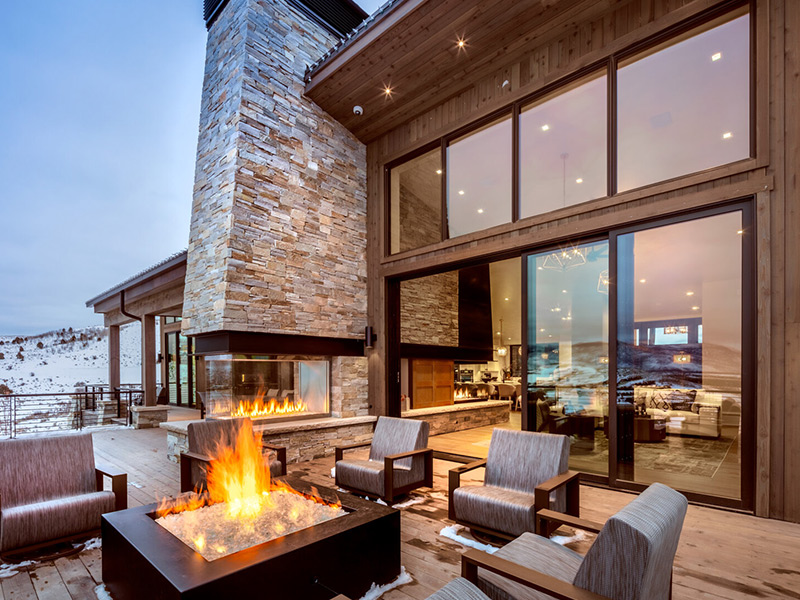
As winter settles in and the mountains fall quiet, light becomes the first welcome.

Against the snow and dusk sky, warm exterior illumination brings the home to life—guiding arrival, enhancing architectural presence, and creating a sense of comfort before the door is ever opened.

Thoughtful exterior lighting sets the tone for what awaits within.

Mountain residences present a unique relationship between architecture and environment. During winter months, natural light fades early, and the surrounding landscape becomes subdued beneath snow and shadow. In this stillness, exterior lighting carries greater responsibility. It must provide clarity without harshness, presence without intrusion.

Warm, carefully calibrated illumination contrasts beautifully against cool snow and twilight skies. The glow does more than highlight structure — it establishes emotional resonance. Pathways are gently defined, ensuring safe approach while maintaining visual elegance. Architectural elements are revealed with restraint, allowing the home to emerge naturally from its surroundings rather than overpower them.

Within the Adaptive Method™, the Exterior layer is composed with hierarchy and balance. Soft washes articulate primary massing. Controlled accents reveal stone, timber, and texture. Entry lighting draws focus to the threshold, signaling arrival with subtle confidence. Every fixture is selected and positioned to prevent glare reflecting off snow or glass, preserving comfort for both guests and homeowners.

Equally important is cohesion with the interior lighting scheme. Exterior warmth should transition seamlessly indoors, creating a unified experience. As the door opens, the atmosphere feels continuous — intentional from approach to entry hall.

In colder climates especially, lighting influences perception of warmth. Even before stepping inside, visitors sense refuge. The architecture feels inhabited, welcoming, alive against the quiet landscape.

This is the discipline of refined exterior illumination: balancing performance with poetry, safety with sophistication.

If your home is set against dramatic natural surroundings, schedule a consultation with Adaptive Design Group to design an exterior lighting plan that welcomes with warmth and distinction.

#AdaptiveDesignGroup

Lighting Cohesive Environments Layers of Lighting Design
Lighting Cohesive Environments 750 750 Adaptive Design Group, Inc.

Lighting Cohesive Environments

Lighting Cohesive Environments

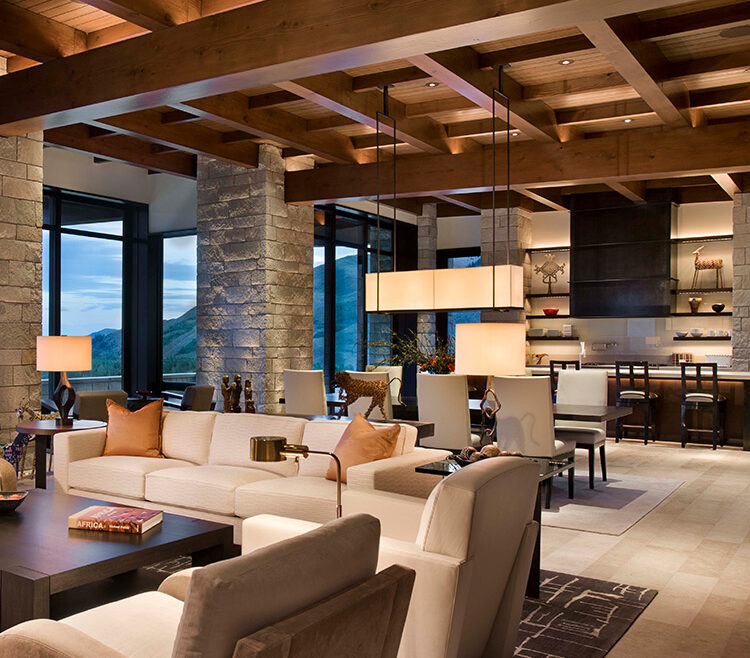
Where living and dining converge, lighting becomes the connective tissue.

Through the Adaptive Method™, layered illumination responds to scale, texture, and use—balancing ambient glow, architectural emphasis, and intimate moments within a single, cohesive environment.

Every layer is intentional, allowing the design to transition effortlessly from day to evening, gathering to quiet.

Open-concept environments require a disciplined lighting strategy. Without clear hierarchy, large shared spaces can feel visually fragmented or uneven after dark. The goal is not to divide the room, but to define it — creating subtle boundaries through light while maintaining a seamless flow.

Within the ADAPTIVE framework — Architecture, Decorative, Art, Path, Task, Interior Design, View, and Exterior — multiple layers interact simultaneously in these spaces. Ambient lighting establishes continuity across the full footprint, ensuring comfort and visual balance. Architectural illumination highlights ceiling details or structural transitions, reinforcing the spatial rhythm. Decorative fixtures anchor key areas such as dining tables or seating arrangements, introducing focal points that organize the environment.

Task lighting is integrated discreetly, supporting functionality without disrupting the aesthetic narrative. Accent layers may highlight artwork, shelving, or material textures, adding depth without visual clutter.

The key lies in calibration. Intensity must be balanced so that the dining area feels intimate during meals while the adjacent living space remains welcoming and composed. Color temperature consistency ensures harmony throughout, preventing subtle tonal shifts that can unintentionally segment the room. Sightlines are studied carefully so that fixtures complement rather than compete across zones.

Control systems further unify the experience. Pre-programmed scenes allow the environment to evolve throughout the day — bright and energized for entertaining, softened for evening relaxation. Transitions occur gradually, maintaining continuity rather than abrupt change.

When lighting acts as connective tissue, the result is cohesion. Guests move naturally between spaces without perceiving boundaries. The architecture reads clearly. The environment feels deliberate and refined.

This is the discipline of layered illumination — not simply lighting rooms, but orchestrating how they function together.

If your home features open-concept living and dining areas, start the design dialogue with Adaptive Design Group to create a lighting strategy that brings the entire environment into harmony.

#AdaptiveDesignGroup