

Built on layered illumination
At Adaptive Design Group, lighting begins with intention.
Our trademarked Adaptive Method™ is built on layered illumination—where each layer serves a purpose, and none exist without meaning.
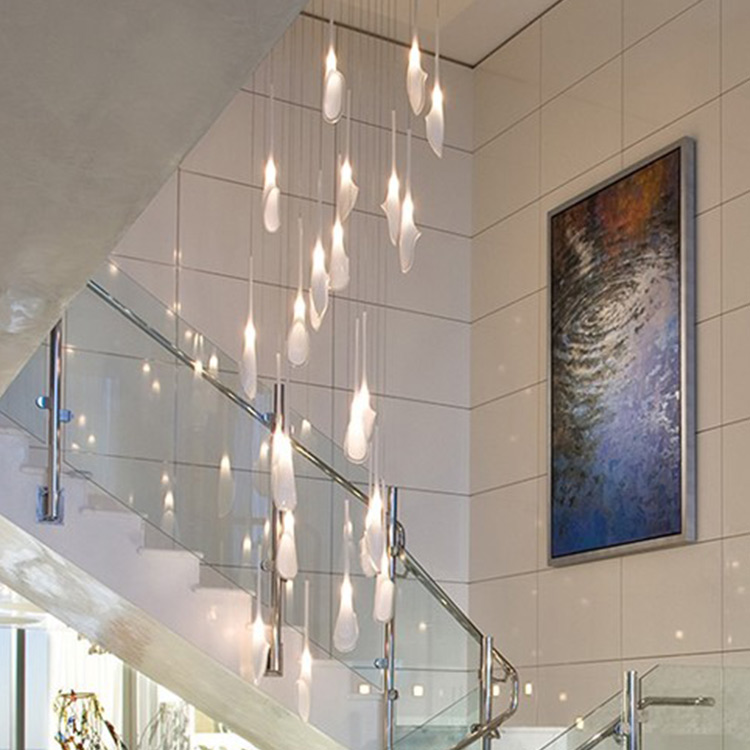
The Decorative Layer is often the most visible, yet its role goes far beyond aesthetics. Pendants ground a space, draw the eye with intention, and create visual cadence—whether hovering above a dining table or articulating a staircase. When thoughtfully integrated, they become part of the architecture itself.
This week, we’re highlighting different aspects of the Adaptive Method™, beginning with the Decorative Layer through pendant lighting in two distinct residential applications, each tailored to the home it serves.
Within the ADAPTIVE framework — Architecture, Decorative, Art, Path, Task, Interior Design, View, and Exterior — each layer contributes to a complete visual composition. The Decorative layer plays a particularly unique role. While it is often the most immediately recognizable element, its impact extends far beyond ornamentation.
In one residence, pendants anchor a dining environment with sculptural clarity, establishing hierarchy and scale within an open floor plan. Their placement reinforces symmetry and proportion, creating a rhythm that feels intentional rather than incidental. In another application, pendant lighting defines vertical movement along a staircase, emphasizing architectural flow while adding dimension and warmth.
The success of decorative lighting lies in restraint and integration. A pendant should never feel isolated from its surroundings. Its size, finish, mounting height, and light output must respond to ceiling volumes, material palettes, and sightlines. When aligned properly, it enhances the architecture without competing with it.
Layering remains essential. Decorative fixtures alone cannot carry the full lighting composition. Ambient and accent layers quietly support them, ensuring visual comfort and eliminating harsh contrast. This balance allows the decorative element to shine as a focal point while maintaining cohesion throughout the space.
Through early collaboration with architects and interior designers, pendant lighting becomes structural rather than supplemental. Junction points are planned in advance. Sightlines are studied. Control systems are engineered to allow seamless transitions from day to evening.
When built on layered illumination, every element has intention. Every fixture has purpose. And every space reflects a disciplined approach to design.
If you’d like to explore how the Adaptive Method™ can shape the lighting strategy in your home, connect with Adaptive Design Group to begin designing with purpose.