

Interior

Lighting Designed to be Felt
Lighting Designed to be Felt 750 750 Adaptive Design Group, Inc.

Lighting Designed to be Felt

Lighting Designed to Be Felt

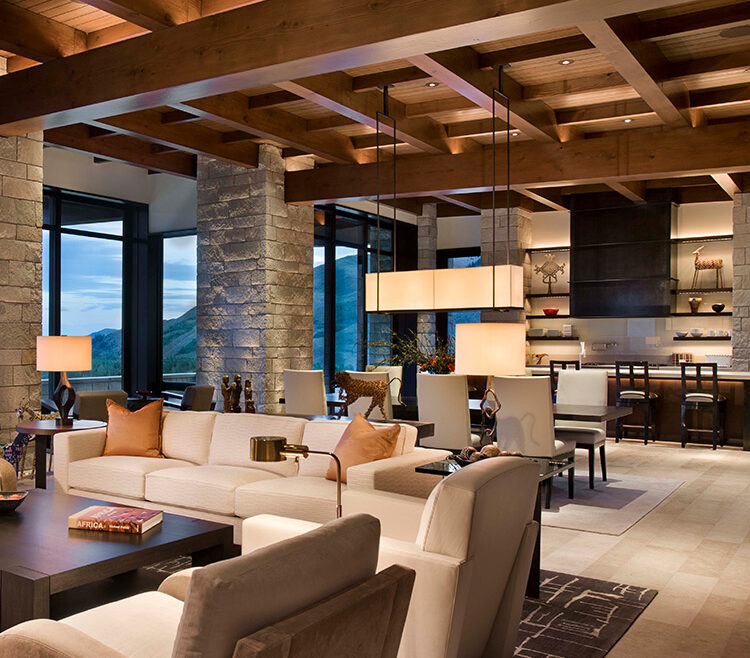
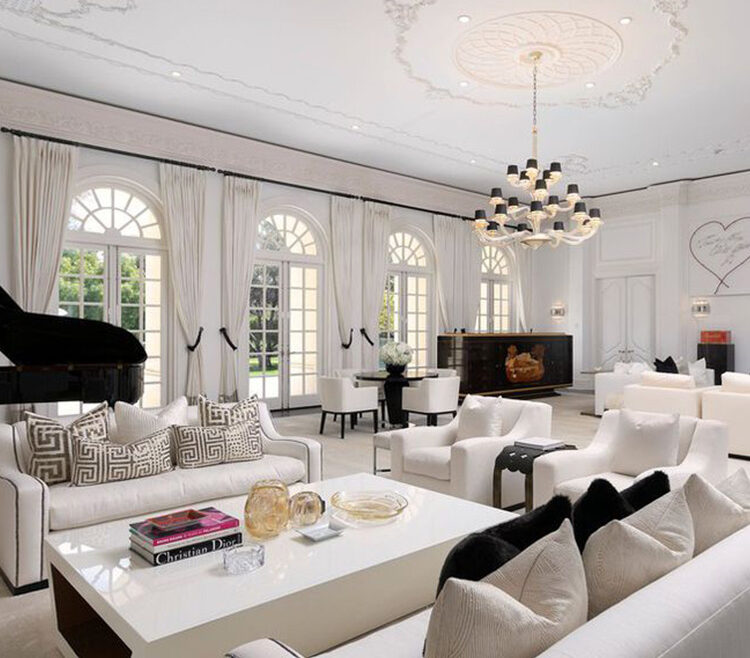
In a space defined by white-on-white tones and intricate ceiling details, lighting becomes the quiet narrator.

It guides movement, distinguishes purpose, and reveals architecture that might otherwise go unnoticed—bringing warmth, depth, and intention to every corner of this grand living room.

This is illumination designed to be felt as much as it is seen.

White interiors present a sophisticated design challenge. Without careful calibration, expansive neutral palettes can feel stark or overly reflective. True refinement lies in shaping light so that it softens, sculpts, and adds dimension — transforming simplicity into layered elegance.

Here, illumination works in harmony with architectural detail. Ceiling coffers are gently articulated with indirect light, revealing craftsmanship without creating glare. Recessed fixtures are placed with precision to maintain clean sightlines, allowing decorative elements and furnishings to remain the visual focal points. Subtle accent layers define vertical surfaces, preventing the room from feeling flat while preserving its serene aesthetic.

Within the Adaptive Method™, this layered approach ensures every element has purpose. Ambient lighting establishes overall comfort. Architectural layers highlight form. Decorative fixtures introduce scale and personality. Together, they create hierarchy without visual noise.

Equally important is control. In a grand living space, lighting must transition effortlessly from daytime clarity to evening intimacy. Tuned color temperatures and dimming scenes allow the atmosphere to evolve naturally, maintaining warmth while respecting the purity of the white palette. The result is a room that feels inviting rather than sterile — expansive yet intimate.

Lighting designed to be felt prioritizes emotional resonance. It reduces harsh contrast. It eliminates glare. It ensures that brightness supports comfort rather than overwhelming it. Guests may not consciously analyze the lighting, but they experience its effect — calm, clarity, cohesion.

When illumination is approached holistically, even the most understated interiors gain richness and depth. The architecture speaks more clearly. The space feels complete.

If you’re designing a living space where subtlety and sophistication must coexist, get in touch with Adaptive Design Group to shape a lighting plan that enhances every detail.

#AdaptiveDesignGroup

Calibrated Light and Shadow
Calibrated Light and Shadow 750 750 Adaptive Design Group, Inc.

Calibrated Light and Shadow

Calibrated Light and Shadow

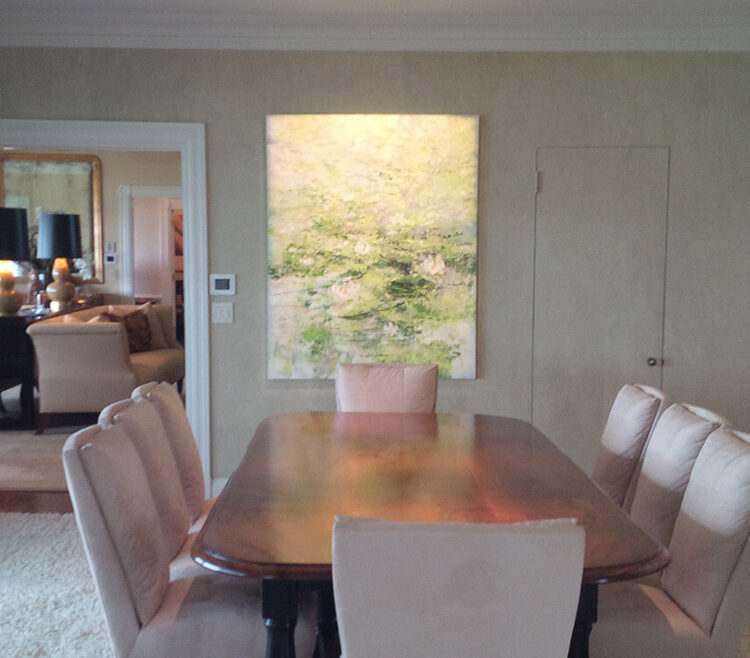
Art deserves lighting as intentional as its creation.

In this space, a museum-quality painting is brought to life with MerlinLight™, a trademarked system designed to reveal true color, depth, and emotional resonance. Every highlight and shadow is calibrated to honor the artist’s vision while harmonizing with the home’s layered lighting scheme.

With the Adaptive Method™, decorative, ambient, and accent layers work together—ensuring that the light never competes, but instead elevates, every detail in the space.

Lighting fine art requires precision beyond general illumination. Color temperature, beam spread, intensity, and angle must all be engineered to reveal pigment accurately while preserving the integrity of the work. Too warm, and tones shift unnaturally. Too cool, and warmth within the composition is lost. Too intense, and texture is flattened. Too soft, and detail disappears.

MerlinLight™ is designed specifically to address these nuances. By calibrating light output and distribution with meticulous control, it enhances dimensionality without glare or visual distraction. Brushstrokes become visible. Depth within the composition emerges. Subtle tonal transitions read clearly — as the artist intended.

Equally important is balance within the broader lighting composition. Art lighting cannot exist in isolation. Within the ADAPTIVE framework — Architecture, Decorative, Art, Path, Task, Interior Design, View, and Exterior — the Art layer must integrate seamlessly with ambient and decorative elements. Accent illumination highlights the piece, while surrounding layers maintain visual comfort and cohesion throughout the space.

This integration prevents harsh contrast between the artwork and its environment. Instead of appearing spotlighted or theatrical, the painting feels naturally present — elevated, yet harmonious with the room’s architecture and interior design.

Proper art lighting also protects the piece itself. Controlled output minimizes UV exposure and heat, safeguarding the longevity of valuable works. In high-end residences where collections often span generations, preservation is as important as presentation.

When light and shadow are calibrated with intention, artwork becomes more than décor. It becomes a focal narrative — quietly commanding attention while enriching the atmosphere of the entire room.

If your collection deserves museum-level precision within a residential setting, schedule a private consultation with Adaptive Design Group to explore how MerlinLight™ can elevate your space.

#AdaptiveDesignGroup

Extend the architectural narrative
Extend the architectural narrative 750 750 Adaptive Design Group, Inc.

Extend the architectural narrative

Extend the architectural narrative

Exterior Lighting extends the architectural narrative beyond the walls of the home—it is the first gesture of design. Within the Adaptive Method™, the Exterior Lighting layer is composed to establish warmth, guide approach, and create a refined sense of arrival that endures.

In this palatial estate, light reveals architectural form, enhances materiality, and casts a soft, intentional glow that elevates the exterior without overpowering it. Thoughtfully placed illumination guides the approach, defines scale, and leaves a memorable first impression long before the door is opened.

Because the experience of a home begins well before you step inside.

Exterior illumination is not an afterthought — it is a continuation of architectural intent. Just as interior lighting shapes atmosphere within, exterior lighting defines perception from afar. It determines how a home sits within its landscape, how materials are interpreted at night, and how guests are welcomed upon arrival.

Within the ADAPTIVE framework — Architecture, Decorative, Art, Path, Task, Interior Design, View, and Exterior — the Exterior layer plays a critical role in unifying structure and site. It must respond to elevation, façade rhythm, landscaping, and sightlines from multiple vantage points. The goal is never excess, but refinement.

Here, architectural features are revealed with precision rather than flood. Columns and arches are gently articulated. Textures are allowed to breathe. Light is layered to create hierarchy — subtle washes for primary massing, controlled accents for architectural details, and carefully calibrated pathway lighting to guide movement with clarity and safety.

Equally important is glare control. True luxury exterior lighting avoids harsh hotspots and intrusive brightness. Instead, it delivers a balanced glow that enhances the home’s presence while respecting its surroundings. In expansive properties, this restraint ensures the architecture stands confidently against the natural backdrop without competing with it.

Control systems further extend flexibility. Scenes can shift from evening entertaining to late-night calm, allowing the exterior to evolve with use while maintaining cohesion.

When exterior lighting is composed intentionally, the home feels complete — not simply illuminated, but expressed. It becomes a beacon of quiet sophistication, visible from a distance yet intimate upon arrival.

To explore how exterior lighting can elevate your home’s presence from the very first impression, begin the conversation with Adaptive Design Group today.

#AdaptiveDesignGroup

Built on layered illumination
Built on layered illumination 750 750 Adaptive Design Group, Inc.

Built on layered illumination

Built on layered illumination

At Adaptive Design Group, lighting begins with intention.

Our trademarked Adaptive Method™ is built on layered illumination—where each layer serves a purpose, and none exist without meaning.

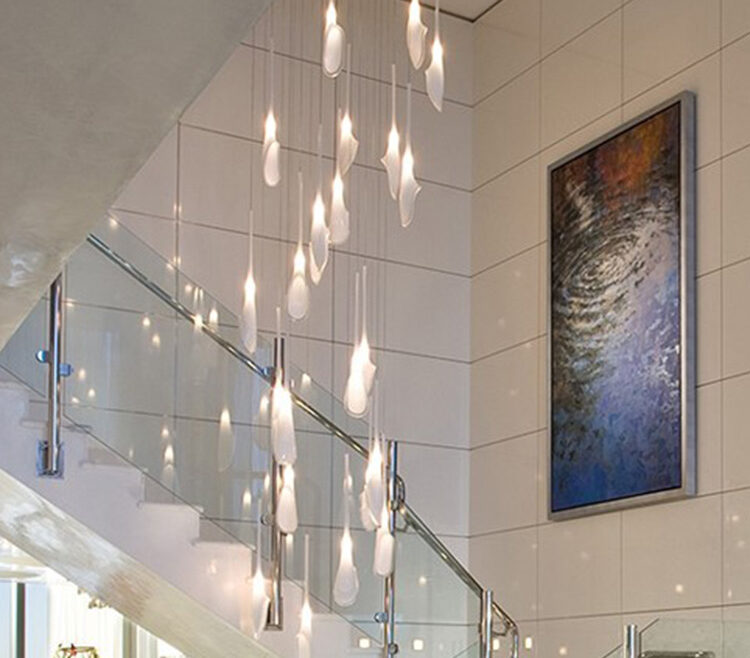
The Decorative Layer is often the most visible, yet its role goes far beyond aesthetics. Pendants ground a space, draw the eye with intention, and create visual cadence—whether hovering above a dining table or articulating a staircase. When thoughtfully integrated, they become part of the architecture itself.

This week, we’re highlighting different aspects of the Adaptive Method™, beginning with the Decorative Layer through pendant lighting in two distinct residential applications, each tailored to the home it serves.

Within the ADAPTIVE framework — Architecture, Decorative, Art, Path, Task, Interior Design, View, and Exterior — each layer contributes to a complete visual composition. The Decorative layer plays a particularly unique role. While it is often the most immediately recognizable element, its impact extends far beyond ornamentation.

In one residence, pendants anchor a dining environment with sculptural clarity, establishing hierarchy and scale within an open floor plan. Their placement reinforces symmetry and proportion, creating a rhythm that feels intentional rather than incidental. In another application, pendant lighting defines vertical movement along a staircase, emphasizing architectural flow while adding dimension and warmth.

The success of decorative lighting lies in restraint and integration. A pendant should never feel isolated from its surroundings. Its size, finish, mounting height, and light output must respond to ceiling volumes, material palettes, and sightlines. When aligned properly, it enhances the architecture without competing with it.

Layering remains essential. Decorative fixtures alone cannot carry the full lighting composition. Ambient and accent layers quietly support them, ensuring visual comfort and eliminating harsh contrast. This balance allows the decorative element to shine as a focal point while maintaining cohesion throughout the space.

Through early collaboration with architects and interior designers, pendant lighting becomes structural rather than supplemental. Junction points are planned in advance. Sightlines are studied. Control systems are engineered to allow seamless transitions from day to evening.

When built on layered illumination, every element has intention. Every fixture has purpose. And every space reflects a disciplined approach to design.

If you’d like to explore how the Adaptive Method™ can shape the lighting strategy in your home, connect with Adaptive Design Group to begin designing with purpose.

#AdaptiveDesignGroup

Light becomes the storyteller
Light becomes the storyteller 750 750 Adaptive Design Group, Inc.

Light becomes the storyteller

Light becomes the storyteller

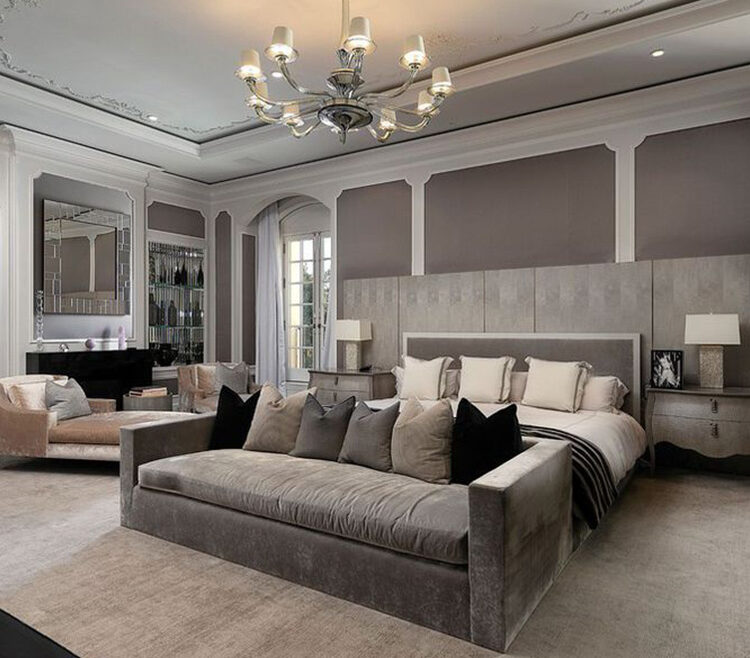
In a space defined by scale and subtlety, light becomes the storyteller.

Within this palatial bedroom, neutral tones are elevated through a carefully layered lighting approach — from sculptural decorative fixtures to softly integrated ceiling illumination. Each layer works in harmony to create warmth, depth, and a gentle glow that enhances the architecture while inviting rest and retreat.

This is lighting that doesn’t just illuminate a room — it shapes the experience of it.

Large, serene bedrooms present a unique design opportunity. Volume alone does not create comfort. In fact, expansive spaces can easily feel cold or undefined without intentional illumination to anchor and soften them. Lighting must bring intimacy to scale — shaping how the room is perceived and how it feels at different times of day.

Here, layered lighting establishes rhythm and hierarchy. Decorative fixtures act as visual punctuation, introducing sculptural presence while reinforcing the interior design narrative. Integrated ceiling illumination provides ambient balance, ensuring the room feels cohesive rather than spotlighted. Subtle accent layers enhance architectural details, adding depth without distraction.

Neutral palettes rely heavily on light for dimension. Without thoughtful illumination, soft tones can appear flat. With carefully calibrated color temperatures and controlled intensity, those same tones become rich and layered. Surfaces reveal texture. Fabrics feel more tactile. Architectural lines are gently defined.

Control is equally important. A bedroom must adapt effortlessly — bright and clear for morning routines, softer and more atmospheric as evening approaches. Engineered dimming and programmable scenes allow the environment to shift naturally, supporting rest without abrupt transitions.

Light, in this context, is not decorative alone. It becomes narrative. It sets mood. It defines where the eye rests and where it travels. It creates a sense of refuge within a grand space.

When lighting design is approached wholistically — in collaboration with architect and interior designer — every element feels intentional. Fixtures are placed with precision. Illumination is shaped rather than scattered. The room breathes with calm balance.

This is the power of architectural lighting in private spaces: shaping atmosphere with restraint, clarity, and warmth.

If you’re designing a primary suite where atmosphere matters as much as architecture, reach out to Adaptive Design Group to begin crafting a lighting story tailored to your home.

#AdaptiveDesignGroup

Lighting the perfect evening
Lighting the perfect evening 750 750 Adaptive Design Group, Inc.

Lighting the perfect evening

Lighting the perfect evening

First impressions are defined after dark.

Thoughtfully designed exterior architectural lighting reveals a home the way light reveals a true gem — facet by facet, intentional and precise. In a natural setting, the right illumination allows form, materiality, and landscape to emerge with quiet confidence, creating a glow that enhances the architecture rather than competing with it.

At Adaptive Design Group, we use light to guide the eye, establish hierarchy, and elevate presence — ensuring your home stands out with restraint, clarity, and distinction.

As daylight fades, architecture takes on a new identity. Without the sun to define shadow and depth, the role of lighting becomes essential. It is no longer supplemental — it becomes the primary tool for shaping perception.

Exterior architectural lighting is about discipline. Too much light flattens form and overwhelms the landscape. Too little leaves detail and craftsmanship unseen. The balance lies in precision — carefully controlled beam angles, measured intensity, and intentional placement that respects both structure and surroundings.

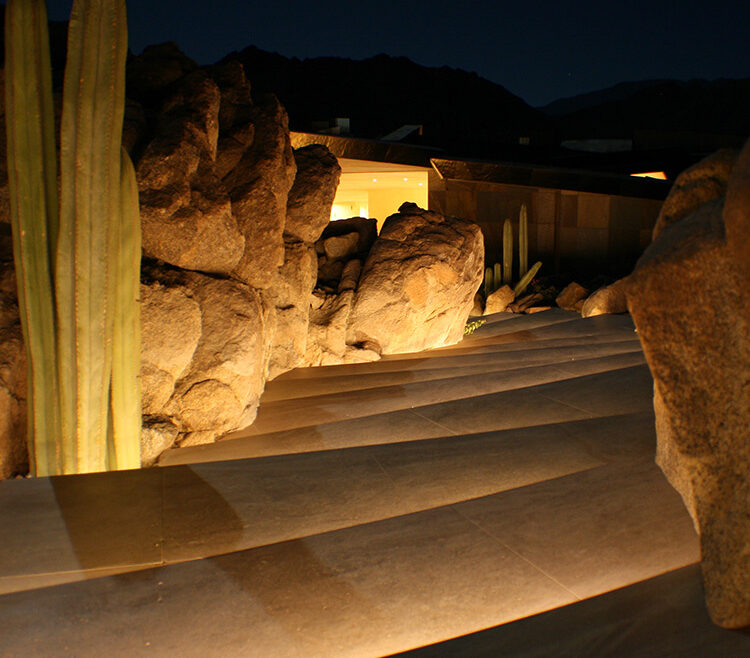
In natural environments especially, restraint is critical. Homes set against mountains, desert horizons, wooded landscapes, or open skies benefit from illumination that enhances rather than disrupts. Light should feel like a natural extension of the environment, revealing stone textures, rooflines, and structural planes while preserving the serenity of the setting.

Hierarchy is another key principle. Not every element demands equal emphasis. Through contrast and composition, lighting establishes focal points — drawing attention to entrances, architectural features, and transitions — while allowing secondary elements to recede gracefully. The result is clarity. The home feels composed, confident, and thoughtfully articulated.

Pathways are subtly defined for safety and guidance. Landscape features are revealed without glare. Windows glow warmly from within, reinforcing a sense of welcome and occupancy. Together, these layers create a cohesive nighttime identity.

When exterior lighting is designed in coordination with architecture from the outset, fixtures remain discreet and performance remains precise. The lighting does not announce itself — it quietly elevates the entire experience.

A well-lit home after dark communicates refinement. It signals intention. It leaves a lasting impression long before the door is opened.

If you’re ready to define how your home is experienced after sunset, we invite you to get in touch with Adaptive Design Group and explore what intentional architectural lighting can achieve.

#AdaptiveDesignGroup

Elevated Systems Integrations
Elevated Systems Integrations 750 750 Adaptive Design Group, Inc.

Elevated Systems Integrations

Elevated Systems Integrations

Elevated Systems Integrations begins long before a home is occupied — it starts at the blueprint phase, where architecture, lighting, and technology are conceived as a unified vision rather than separate components.

In a custom countryside residence, particularly one set against mountainous terrain, integration is essential. Expansive views, dramatic rooflines, natural materials, and wide-open interiors demand systems that support the architecture without intruding upon it. Technology must be present, but never visible. Powerful, but never overwhelming.

This is where thoughtful integration transforms a home.

Lighting control, motorized shading, electrical engineering, and smart programming are not layered on after construction — they are woven into the structural framework of the residence. Wiring paths are coordinated early. Equipment rooms are positioned strategically. Controls are refined and simplified to ensure intuitive use.

In homes with panoramic glass and sweeping landscapes, integrated shading preserves comfort while maintaining views. Automated systems respond to daylight conditions, reducing glare and managing heat gain without constant adjustment. As evening settles, lighting scenes transition seamlessly, guiding the home from natural brightness to warm architectural clarity.

In mountain or countryside settings, exterior systems require equal consideration. Landscape lighting, façade illumination, and pathway guidance must be engineered to withstand environmental conditions while preserving the serenity of the surroundings. Controls unify interior and exterior environments, creating continuity rather than separation.

The goal is cohesion.

Elevated Systems Integrations means the homeowner does not think about the technology. They simply experience comfort. Light adjusts naturally. Spaces respond intuitively. The home feels calm, capable, and complete.

This level of precision demands early collaboration between architect, lighting designer, integrator, and builder. When the technical team works together from the outset, opportunities emerge to conceal hardware, streamline controls, and preserve the architectural integrity of the design.

The result is a residence where structure, systems, and atmosphere operate as one.

Integration at this level is not about complexity — it is about refinement. It ensures that a home nestled within natural beauty remains timeless, intelligent, and effortlessly livable.

If you’re planning a custom residence where architecture and technology must operate in perfect harmony, Adaptive Design Group invites you to begin the conversation. Elevated integration starts with intentional design.

#AdaptiveDesignGroup

A gallery of luxury
A gallery of luxury 750 750 Adaptive Design Group, Inc.

A gallery of luxury

A gallery of luxury

A garage designed like a gallery.
With precision lighting and thoughtful illumination, this space transforms from purely functional to a refined display — where luxury cars, collector vehicles, golf carts, and everyday drivers are showcased with intention.

Even, glare-controlled light enhances form, finish, and detail, proving that every space in a home deserves the same level of design consideration.

Because why shouldn’t your garage be as elevated as the vehicles that adorn it?

In high-end residential design, certain spaces are expected to impress — great rooms, kitchens, primary suites. Yet the garage, often overlooked, holds extraordinary potential. For collectors and enthusiasts, it is more than storage. It is a personal gallery. A curated environment. A place where craftsmanship meets performance.

Lighting defines that transformation.

Luxury vehicles are sculptural by nature. Their curves, paint finishes, carbon fiber details, and precision-engineered surfaces respond dramatically to properly controlled illumination. Uneven or harsh lighting can distort color and create glare, diminishing the visual impact. By contrast, evenly distributed, glare-controlled light reveals true color saturation, crisp lines, and subtle contours with clarity and sophistication.

Create a gallery of luxury.

In this space, lighting is engineered to enhance — not overpower. Carefully selected beam spreads and mounting positions eliminate hot spots and distracting reflections. The result is a calm, balanced environment where each vehicle is presented with the same care as fine art.

Layered illumination also contributes to functionality. Clear visibility supports maintenance and daily use, while flexible control systems allow the atmosphere to shift for gatherings, private viewings, or simple enjoyment. The space can feel dynamic when desired, or composed and serene.

Material finishes within the garage — flooring, cabinetry, wall panels — are equally elevated through thoughtful lighting placement. Surfaces feel intentional rather than incidental. The garage becomes visually integrated with the rest of the home’s architectural language.

When lighting design is approached holistically, no space is secondary. Every environment contributes to the overall experience of the residence. A well-lit garage reflects the same commitment to excellence found throughout the home.

Because exceptional design does not stop at the threshold of practicality.

If you envision a garage that showcases your collection with the same precision and refinement as a gallery, Adaptive Design Group invites you to begin the conversation. Let’s elevate every square foot of your home.

#AdaptiveDesignGroup

Texture In Lighting
Texture In Lighting 750 750 Adaptive Design Group, Inc.

Texture In Lighting

Texture In Lighting

Mastery of Texture In Lighting

From the front approach, the home is awash in warm light—drawing the eye upward along the stairway and across the façade. Thoughtfully designed illumination enhances the texture of brick and concrete, transforming these materials into a welcoming, refined exterior presence.

Lighting sets the tone long before you step inside.

Texture has always been a powerful element in art and architecture. It adds depth, character, and emotional resonance to a space. Whether expressed through stone, brick, wood, or concrete, texture tells a story about craftsmanship, materiality, and design intent. But without light, texture remains silent.

Architectural lighting brings these surfaces to life.

Here, carefully positioned illumination grazes across the façade, revealing subtle variations in the brickwork and the natural grain of the concrete. Shadows form gently within recesses, while highlights trace edges and planes. The result is a visual rhythm that feels rich, dimensional, and inviting rather than flat or uniform.

Warm light plays a particularly important role in this composition. It softens harder materials, creating a sense of comfort without diminishing their strength. Brick feels grounded and timeless. Concrete feels sculptural rather than industrial. The home presents itself with quiet confidence, establishing a sense of welcome before the door is ever opened.

The stairway becomes more than a functional element. Light guides movement upward, reinforcing the architectural flow while providing visual clarity and safety. Each step is defined without distraction, allowing the journey toward the entrance to feel natural and intentional.

In artistic composition, texture creates contrast. Smooth against rough. Light against shadow. Stillness against motion. Lighting amplifies these relationships, allowing materials to express their full character without competing for attention. The architecture remains the focal point — the light simply reveals it.

This approach requires restraint. Key fixtures are integrated discreetly, ensuring that illumination feels like part of the structure rather than an added layer. The goal is never to showcase the lighting itself, but to enhance the experience of the architecture.

When texture and light work together, the exterior becomes more than a façade. It becomes an introduction to the home’s design philosophy — one rooted in material honesty, thoughtful craftsmanship, and visual harmony.

Lighting, when designed with purpose, doesn’t just illuminate surfaces. It reveals the soul of the architecture.

If you’re seeking lighting that enhances material texture and architectural character with quiet precision, we invite you to connect with Adaptive Design Group and begin the conversation.

#AdaptiveDesignGroup

Creating an Inviting Warmth
Creating an Inviting Warmth 750 750 Adaptive Design Group, Inc.

Creating an Inviting Warmth

Creating an Inviting Warmth

Creating an Inviting Warmth
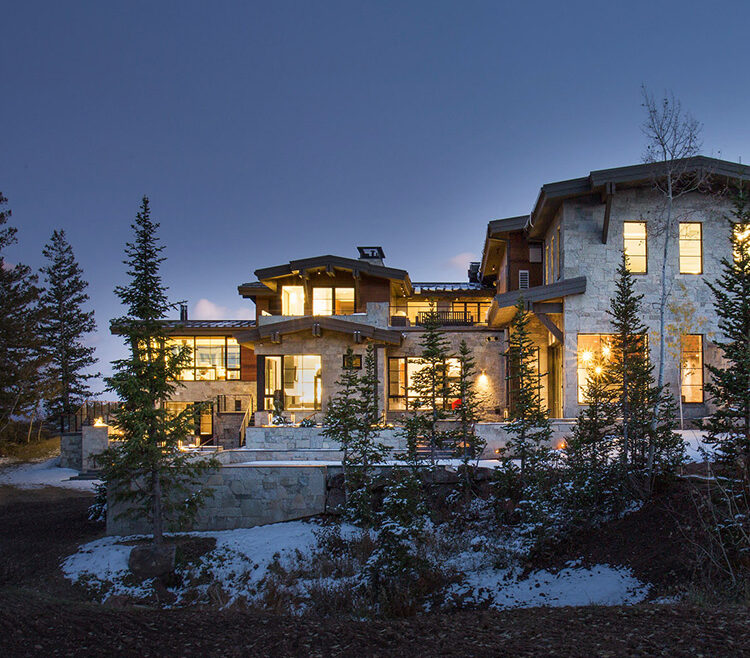
As day transitions to evening, the warm glow of the home draws the eye inward from the patio.

Even with expansive floor-to-ceiling glass and abundant natural light, a thoughtfully engineered lighting system enhances the architecture—guiding the gaze, defining depth, and creating an inviting sense of interior warmth.

When lighting is designed with purpose, it doesn’t compete with daylight—it completes the experience.

In homes defined by openness and transparency, lighting plays a critical role in shaping how spaces feel after sunset. Large expanses of glass invite natural light deep into the interior during the day, creating a bright, airy atmosphere. But as daylight fades, the transition to evening requires a different kind of visual balance.

Here, illumination is used to gently draw the eye inward. Warm tones replace the cooler hues of daylight, establishing a sense of comfort and enclosure without sacrificing the architectural clarity of the space. Light traces the geometry of the structure, revealing ceiling planes, vertical surfaces, and material textures with quiet precision.

Rather than overpowering the natural character of the home, the lighting system complements it. Subtle layers of illumination define depth and dimension, allowing interior spaces to feel intimate while remaining visually connected to the outdoors. The result is a seamless shift from day to night — one that feels natural rather than abrupt.

Architectural lighting is most successful when it feels invisible. Fixtures remain discreet, while the light itself becomes the design tool. Carefully controlled beam angles prevent glare and preserve visual comfort, ensuring that the environment feels calm, balanced, and welcoming.

Warm light has a powerful emotional impact. It softens surfaces, enhances natural materials, and encourages a sense of relaxation. In social spaces, it supports conversation and connection. In quieter areas, it creates a feeling of retreat. Every moment is shaped by light that responds to how the home is lived in.

This level of refinement is only possible when lighting is considered early in the design process. By working alongside architects and interior designers from the beginning, lighting can be integrated into the structure itself — shaping the way spaces transition, interact, and feel throughout the day.

As evening settles in, the home becomes a beacon of warmth. The interior glows gently against the surrounding landscape, inviting movement inward and reinforcing the connection between architecture and atmosphere.

When lighting is designed with intention, it does more than illuminate. It welcomes.

If you’re looking to create a home that feels just as inviting at night as it does during the day, we invite you to connect with Adaptive Design Group and begin the design conversation.

#AdaptiveDesignGroup