

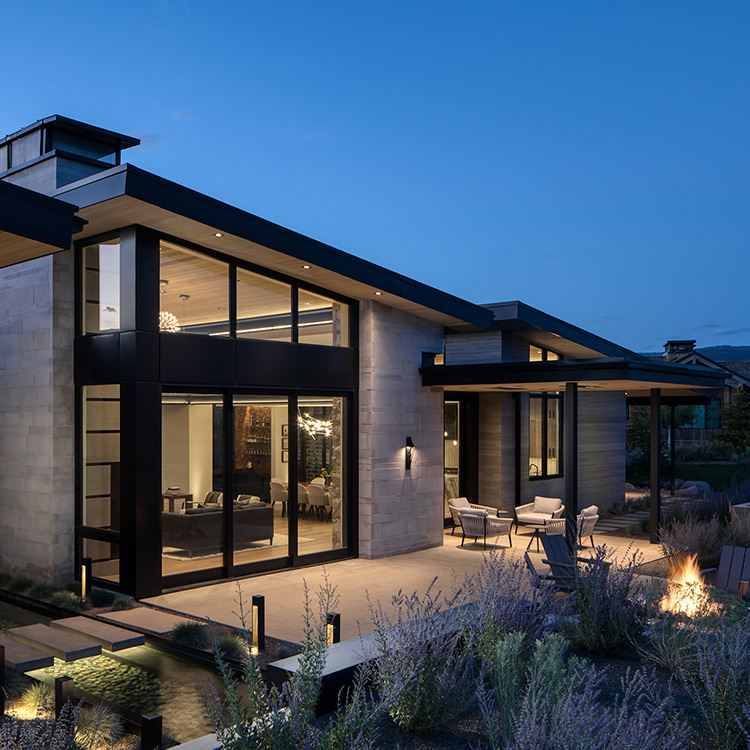
How Does Lighting Affect Mood?
Lighting design unifies all physical elements within a space, and creates the tone for the people within it.
Lighting is one of the most powerful, and often underestimated, elements in architectural and interior design. It does more than illuminate a space; it shapes how that space is experienced, influencing mood, perception, and even human biology.
At its core, lighting affects how we feel.
Research in environmental psychology and neuroscience has shown that light directly impacts circadian rhythms; the internal clock that regulates sleep, alertness, and overall well-being. Exposure to cooler, brighter light during the day can increase focus and energy, while warmer, lower-intensity light in the evening encourages relaxation and rest. When lighting is dynamically aligned with these natural rhythms, spaces feel intuitive, comfortable, and supportive of daily life.
This is where architectural lighting design becomes essential. It is not simply about brightness or fixture selection. The ultimate achievement is creating an environment that embraces and responds to the people within it.
The Science Behind Lighting and Mood
Studies have consistently demonstrated a direct relationship between lighting and human emotion. Lighting does affect mood and we have seen how. Properly designed lighting can reduce stress, improve concentration, and enhance overall comfort. Conversely, poorly designed lighting creates harsh glare, inconsistent levels, or incorrect color temperature – all of this can result in fatigue, discomfort, and even anxiety.
Natural light serves as the benchmark. The human eye is inherently attuned to the subtle shifts of daylight. Consider the warmth at sunrise and sunset and the clarity at midday. The most effective architectural lighting strategies draw inspiration from this natural progression and mimic its best qualities through carefully controlled artificial light.
In residential environments, this approach creates spaces that feel grounded and familiar. In professional or commercial settings, it supports productivity and clarity. In both cases, lighting becomes one of our best tools for shaping human experience.
Aligning Lighting with the Way We Live
At Adaptive Design Group, we design lighting around the people who inhabit the space. Every project begins with understanding how a home will be used—where moments of activity occur, where relaxation is prioritized, and how spaces transition throughout the day.
Through the Adaptive Method™, we integrate multiple layers of light—Architecture, Decorative, Art, Path, Task, Interior Design, View, and Exterior—to create a cohesive system. Each layer contributes to both function and atmosphere.
Task lighting ensures clarity where it is needed most. Decorative lighting introduces visual rhythm and focal points. Architectural lighting defines space and enhances form. Together, these layers are calibrated to work in harmony, creating environments that feel both purposeful and inviting.
Our ability to collaborate with architectural and interior designers on residential projects is what sets our work apart. We are not competing for space, we are completing it.
This balanced approach is what allows lighting to support daily life without overwhelming it.
Warmth, Color, and the Natural Experience of Light
How else does lighting affect mood?
Color temperature plays a significant role in how a space is perceived. Warmer tones, typically in the 2700K to 3000K range, create a sense of comfort and intimacy, making them ideal for living spaces, bedrooms, and areas designed for relaxation. Cooler tones can be used selectively in task-oriented environments where clarity and precision are required.
Beyond temperature, the quality of light is equally important. High color rendering ensures that materials, finishes, and artwork are seen as they were intended. This is particularly critical in homes where art collections or carefully curated interiors play a central role.
The goal is not to replicate daylight exactly, but to echo its natural qualities. Using a balance of lighting for each different layer within a project creates a unified result. Every space within is gently optimized with soft transitions, balanced contrast, and a sense of depth.
When lighting feels natural, it becomes almost invisible, allowing the space itself to take precedence.
Lighting as the Foundation of Design
While architecture and interior design establish the framework of a space, lighting is what brings it together and ultimately – to life. It defines how materials are perceived, how furniture and decorative elements are experienced, and how spaces evolve from day to night.
Without thoughtful lighting, even the most beautifully designed environment can feel incomplete. With it, spaces gain dimension, warmth, and emotional resonance.
Lighting is not an accessory, it is a foundational element of design.
Final Thoughts
When lighting is designed with intention, it aligns with both the architecture and the people who inhabit it. It supports well-being, enhances experience, and creates environments that feel as good as they look. Using modern lighting and technology we create spaces that can be enjoyed for years to come.
If you’re ready to create a space that supports how you live, work, and relax, connect with our team to begin designing lighting that is both purposeful and deeply felt.